BESST CEU Seminars and Webinars

BESST is approved to provide Continuing Education Units (CEUs) for the following classes as described below. BESST CEU instructors will coordinate with utility managers, supervisors, engineers to establish dates and times as well as curriculum and the number of CEU units per curriculum. BESST will provide sign-in sheets to be completed by the attendees as well as a certificate of completion for each attendee – listing the title of the class(es), instructor(s) and the number of CEU credits earned. BESST will retain copies of the attendance list and certificates of completion for each attended for a period of 4 years from the date that the CEU credits were earned.

If you have any questions about our classes, you can reach out to the following

Noah Heller, MS PG
President, Principal Hydrogeologist, BESST, Inc.
Kimberly Miles, PG
Project Manager, Senior Hydrogeologist
Desiree Hatton

Analyst 2

DIVISION OF FINANCIAL ASSISTANCE

Administration/Operator Certification Branch | Operator Certification Section

Inside Sales and Technical Info

Class 1 - 50 Minutes (1 CEU)

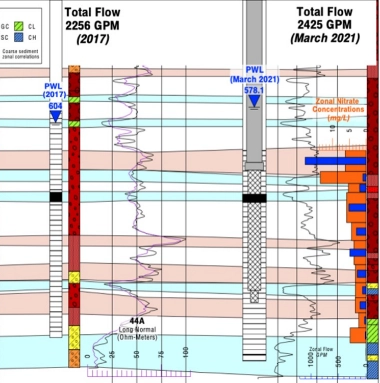
Dynamic Flow and Chemistry Profiling of Public Supply Wells

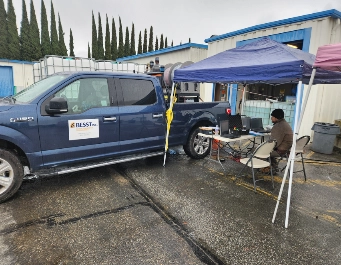
This class provides essential information on flow hydraulics inside the well when pumping into the drinking water system or to waste. Information is provided on how groundwater enters the well and how we measure groundwater entry volumes along the length of the well screens. The class also covers how we sample and measure different chemicals, dissolved minerals and elements that enter the well in association with zonal flows. Case histories are provided.
Class 2 - 50 Minutes (1 CEU)

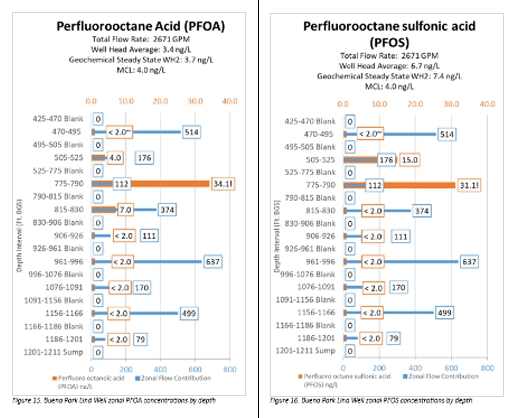
Well Modification of Public Supply Wells to Meet Regulatory Compliance and Avoid and/or Reduce Treatment - Naturally Occurring Contaminants (Arsenic, Hexavalent Chromium, Iron, Manganese, Uranium, Gross Alpha, Fluoride.
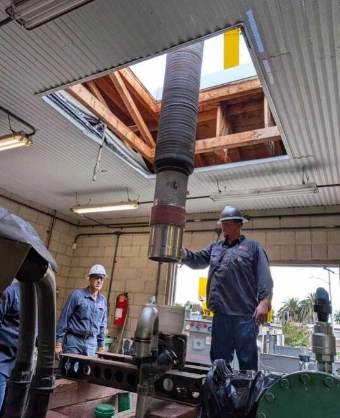
Now that we have identified zonal inflows and chemistries, what tools do we use to modify the well to block undesirable contaminants from entering the well? The end goal is to make the well compliant and/or reduce treatment? The class focuses on Geogenic, naturally occurring contaminants such as arsenic, hexavalent chromium, iron, manganese, uranium and dissolved gases such as H2S, CH4 and CO2. The course covers the use of packers, liners, sleeves, engineered suctions and well-backfilling. Case histories are provided.
Class 3 - 50 Minutes (1 CEU)

Well Modification of Public Supply Wells to Meet Regulatory Compliance and Avoid and/or Reduce Treatment - Anthropogenic Contaminants (PFAS, VOCs, Nitrate, Perchlorate and Other Hydrocarbons)

Now that we have identified zonal inflows and chemistries, what tools do we use to modify the well and block undesirable contaminants from entering it? The end goal is to make the well compliant and/or reduce treatment? The class focuses on the Anthropogenic Contaminants such as PFAS, VOCs, Nitrate, and Perchlorate. The course covers the use of packers, liners, sleeves, engineered suctions and well-backfilling, it also covers advanced testing methods for ensuring long-lasting, sustainable compliance outcomes. Case histories are provided.
Class 4 - 50 Minutes (1 CEU)

Well Modification through Well Rehabilitation.
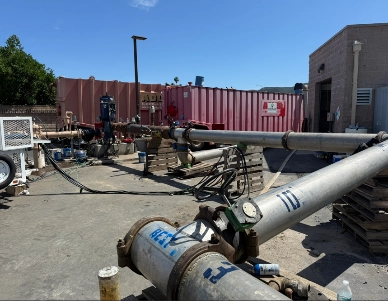
Well Modification through Well Rehabilitation. After identifying contaminant distribution along the well screen’s length, to what extent should the well be rehabilitated? Where should the rehabilitation focus—which part(s) of the well screen—and what types of rehab methods should be used (e.g., mechanical, acoustic, hydraulic and/or chemical).
Class 5 - 50 Minutes (1 CEU)

Responsible Groundwater Exploration - How to avoid or minimize treatment for New Public Supply Wells.

Why do so many new groundwater wells fail due to water chemistry? And why does standardized testing sometimes lead to erroneous well designs and outcomes? This class presents the root causes for these problems and how to modify the drilling and borehole sampling approach to achieve compliant well outcomes. Case histories are provided.
Class 6 - 50 Minutes (1 CEU)

Static and Dynamic Sand Invasion and Air Entrainment Surveys. Identification and Repair

Static and Dynamic Sand Invasion and Air Entrainment Surveys explores how to investigate these two common problems. Once the source areas along the well screen have been identified, how are these problems resolved? Case histories are provided.
Class 7 - 50 Minutes (1 CEU)

Well Field Modeling and Modification to Reduce Treatment.
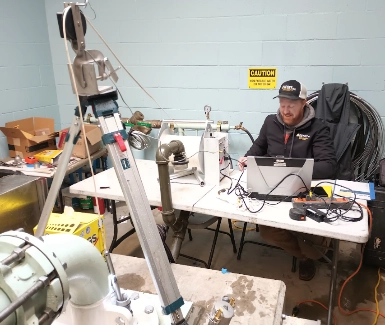
Some well fields experience widespread contamination. While well modification proves effective for individual wells, what other considerations arise when a well field contains multiple wells contaminated with one or more substances at different depths? A solid understanding of the subsurface hydrogeology, along with the construction and operating conditions of the wells in the well field is key to developing a coordinated well modification and field operational model to sustain compliant outcomes. This class provides information and case histories on how to achieve these goals.

NOTE: All classes will be coordinated with the Operations Supervisor, Manager, Superintendent, Lead Engineer/Hydrogeologist, Assistant General Manager, or General Manager who will ensure each attendee’s presence for the class duration.