
Market Experience
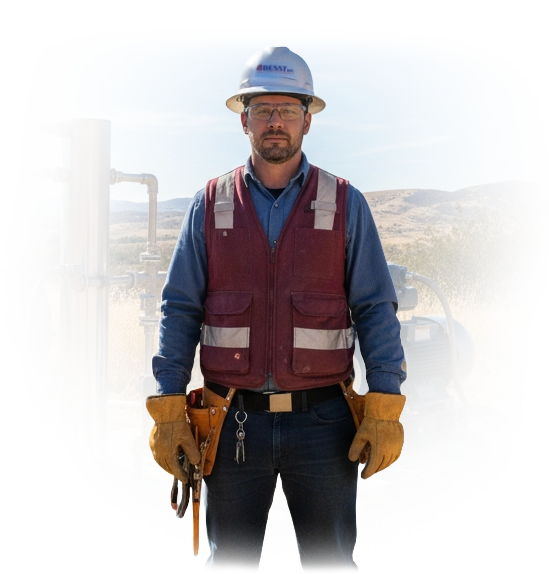

Drinking Water
The vast majority of BESST’s experience comes from servicing over 750 public supply wells just in California alone. Contaminants affecting the groundwater resources of public supply wells are variable ranging from inorganics, volatile organic compounds (VOCs), metals, and emerging contaminants such as Per-Poly-fluoroalkyls (PFAS). BESST’s expertise and services in downhole well diagnostics have enabled a majority of the water agencies governing these 750 public supply wells to essentially reduce their contamination levels, bring out-of-compliance wells back into compliance, and ultimately remove the costs for treatment. In the cases that well modification and-or rehabilitation are not appropriate, BESST has been able to provide clients with the scientific knowledge and approach on how to operate their well(s) and manage their aquifer(s).
For instance, in the Chino basin, BESST has been successful in reducing nitrate levels below its respective 10 mg/L maximum contaminant level (MCL) through the use of well modification by packer installation.

Agricultural
Typically, contaminants that impair the groundwater resources of agricultural wells are a consequence of extensive land use through fertilization, livestock, and machinery. Common contaminants include pesticides, total dissolved solids (TDS), and fertilizer nutrients such as boron, nitrogen, and phosphorus. If not mitigated, these contaminants pose unintended environmental impacts as these contaminants do not remain stationary and can migrate off-site to local streams, rivers, and lakes.
From BESST’s experience, we find there are two important questions to ask when it comes to groundwater resources for agriculture.
- Is the groundwater quality acceptable for agricultural use?
- Will agriculture practices potentially contaminate the groundwater resource?
In 2018, BESST investigated an agricultural well in Paso Robles with water quality concerns of arsenic, boron, and TDS. After conducting a dynamic flow and depth-dependent chemistry analysis, BESST was able to rapidly delineate the flow production of the well at discrete-depth intervals and simultaneously find the depth interval where arsenic and boron concentrations were highest and where they seemingly attenuated. Not only did these results produce invaluable information about the production of the well and the chemistry of the surrounding aquifer(s); but as an outcome, BESST was able to produce recommendations to the client on how deep to drill new exploratory boreholes for constructing new wells, how to gain more knowledge of the aquifer, and going forward how to mitigate the water quality concerns.

Industry
